


Paula Newsome is a talented actress best known for her strong performances in television dramas and crime series. Many fans have recently searched for information about her health and possible disability after noticing changes in her appearance and movement on screen. However, there has been no official confirmation from Paula Newsome about having a disability or serious medical condition. Most online discussions are based on rumors and fan speculation rather than verified facts.
Despite the curiosity surrounding her health, Paula Newsome continues to focus on her successful acting career and inspire audiences with her dedication. She has earned praise for her professionalism, confidence, and memorable roles in popular TV shows. Her work proves that talent and determination matter more than public assumptions. Understanding the truth behind her health and career helps fans respect her privacy while appreciating her achievements in the entertainment industry.
Who Is Paula Newsome?
Paula Newsome is an American actress born on October 7, 1961, in Chicago, Illinois. She grew up in Chicago and graduated from Morgan Park Academy, later earning a bachelor’s degree from Webster University’s Conservatory of Theater Arts. She began her acting journey in community theater as a child before moving to New York City, where she was cast in Broadway productions.
She is multilingual, fluent in French and Italian, with knowledge of Korean and Vietnamese.
She made her big screen debut in the 1992 comedy Straight Talk starring Dolly Parton, and went on to guest star in series including Chicago Hope, Law & Order, Ally McBeal, NYPD Blue, ER, Heroes, and Criminal Minds.
She is best known for her supporting role in Spider-Man: No Way Home (2021) and her leading role as Maxine “Max” Roby in the CBS crime drama CSI: Vegas (2021–2024). She also had notable recurring roles in Barry, Chicago Med, and NCIS.
Her estimated net worth in 2026 is between $3 million and $5 million, accumulated over three decades of consistent television, film, and stage work.
Paula Newsome’s Limp: What Is Actually Known?
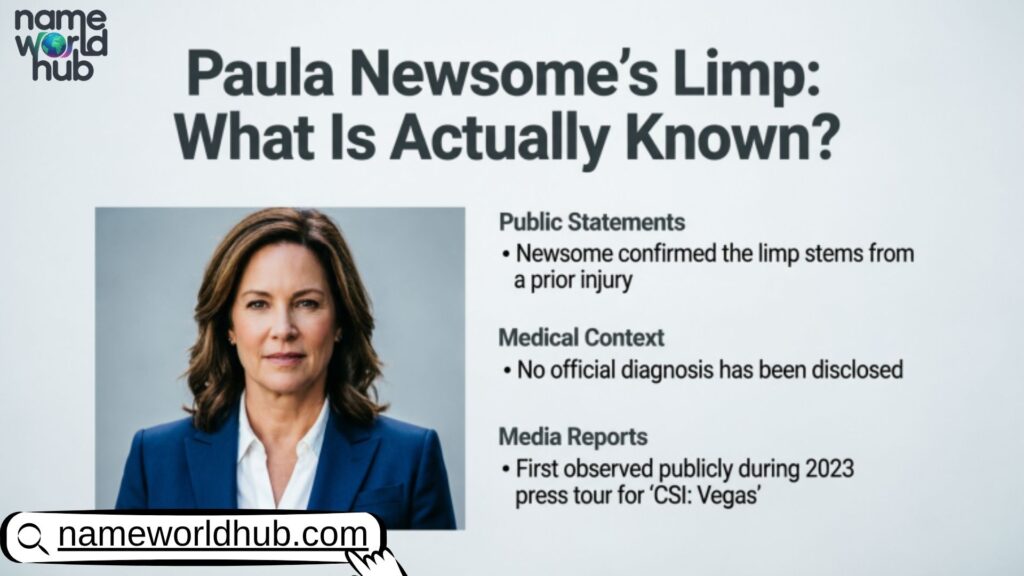
Paula Newsome has never personally addressed, confirmed, or denied having a disability in any interview, press statement, or social media post. Neither she nor her publicist has commented officially on her walking style or mobility.
What is confirmed is that many viewers — particularly those who follow her at public events and red carpet appearances — have observed a noticeable limp, most visible when she walks longer distances or in candid, unscripted settings outside of her controlled on-screen roles.
The rumor appears to have originated from a fan’s post on X (formerly Twitter), in which the fan speculated she might have arthritis or a hip injury. This was never acknowledged, corrected, or denied by Newsome or her publicity team.
Various unverified theories circulating online include past injury, neurological conditions, and other medical causes — but none of these have been confirmed. The only reliable description is that viewers notice she sometimes walks with a limp, and that is the extent of verified knowledge.
The Bigger Picture

Paula Newsome’s limp appears in authoritative, leadership roles — like Maxine Roby in CSI: Vegas — which normalizes physical differences in positions of power and competence. Viewers with mobility challenges see themselves reflected in a forensic team leader rather than a marginalized supporting character.
In short, the cause of her limp remains her private business. What’s beyond dispute is a remarkable 30-year career built entirely on talent and dedication.
Paula Newsome’s Career Despite Physical Differences
Rather than letting her limp limit her opportunities, Paula Newsome has embraced complex and challenging roles. Her performance in CSI: Vegas demonstrates her ability to balance intellectual command with physical presence, and her work in Barry shows she can adapt to roles requiring emotional intensity.
Hello! magazine interview she said: “My life took a huge turn after the HBO comedy Barry because Hollywood saw this show where I was allowed to play a role that I absolutely loved; Detective Janice Moss was funny, she was poignant, and finally Hollywood was like, ‘Wait a minute, get her, get her!’ But I’d been doing that work for years!”
She leads a major network procedural show — and women over 60 rarely get these opportunities. Her portrayal of Maxine “Max” Roby in CSI: Vegas earned her a Screen Actors Guild Award nomination, while her Marvel cameo in Spider-Man: No Way Home remains a fan favorite, with the film grossing over $1.9 billion worldwide.
Paula has built a body of work spanning drama, comedy, and genre television — including Chicago Hope, The West Wing, Grey’s Anatomy, Barry, and CSI: Vegas. Her versatility across different types of roles demonstrates range that transcends physical considerations.
Media and Public Speculation

The entertainment industry thrives on speculation, and Paula Newsome’s disability has fueled many conversations online. Blogs, gossip outlets, and entertainment forums frequently ask why she walks with a limp. On Twitter and Reddit, threads often dissect her gait in various television scenes.
Entertainment journalism has handled the topic with varying degrees of respect. Some outlets focused appropriately on her acting career achievements, while others sensationalized her limp for clicks. The shift has been notable recently — more publications now lead with her professional accomplishments and mention her distinctive walk without making it the headline.
In a 2023 panel at the Television Critics Association, she deflected health-related questions with humor, stating: “My walk is my walk — it’s gotten me this far.” That response has been widely cited as an example of her dignity and self-possession on the subject.
Paula Newsome and Representation in Hollywood

Disability representation in Hollywood has historically been minimal, with many disabled roles being played by able-bodied actors. Paula Newsome’s presence on mainstream television challenges that narrative. By authentically bringing her own life experiences to the screen, she indirectly advocates for more inclusivity in the industry.
She has played authority figures, leaders, and intellectuals — roles that disability representation often lacks. The fact that her limp never prevented her from portraying competent, respected characters creates an important precedent for future actors with disabilities.
Her limp appears in authoritative, leadership roles like Maxine Roby in CSI: Vegas. This matters because it normalizes physical differences in positions of power and competence. Viewers with mobility challenges see themselves reflected in a forensic team leader rather than a marginalized supporting character.
Health Rumors vs. Reality

The internet has generated a wide range of unverified theories about the cause of Paula Newsome’s limp. Some believe it is caused by a neurological disorder, others suggest a past injury or stroke-related complications. Rumors about Parkinson’s disease also circulate, though none of these speculations have ever been verified.
After doing research, the rumor appears to have originated from a fan’s post on X (formerly Twitter), in which the fan speculated she might have arthritis or a hip injury. This was never acknowledged, corrected, or denied by Newsome or her publicity team — making it most likely an unfounded claim.
The honest answer is that Paula Newsome has never personally addressed, confirmed, or denied having a disability in any interview, press statement, or social media post. Her silence is not an absence of self-awareness — it is a deliberate, fully justified choice by a private person operating in a very public profession.
Ultimately, the question of why she walks with a limp is the least interesting thing about her. The more compelling story is how she built a 30-year career, landed a lead role on a major network drama in her early 60s, appeared in one of the highest-grossing films ever made, and did it all without making noise about any of it.
Public Reactions to Paula Newsome’s Disability
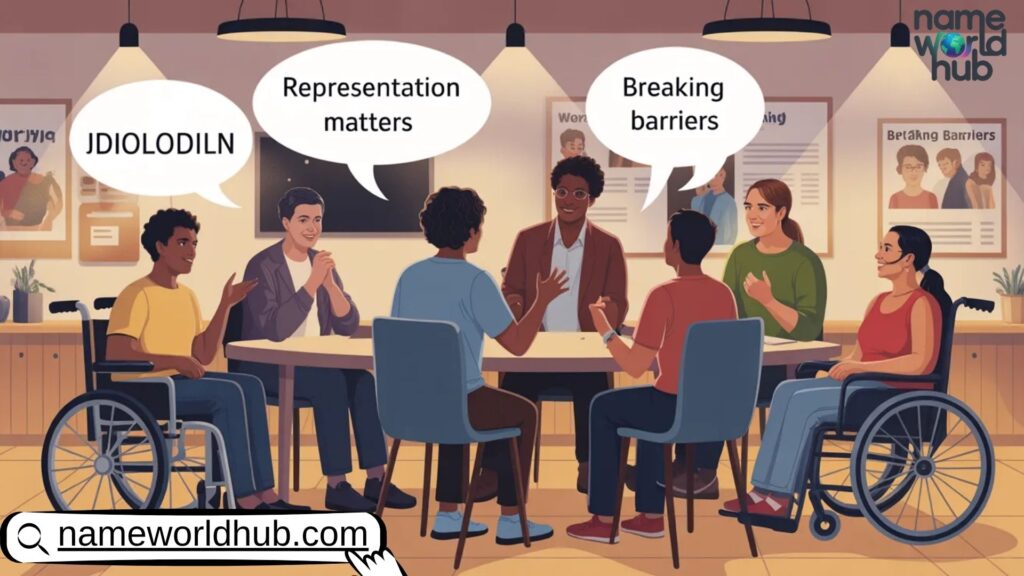
Fan reactions range dramatically across platforms. Twitter users raise questions about her walking, Reddit threads dissect public appearances, and Instagram comments mix genuine support with inappropriate curiosity. Some responses demonstrate real compassion and understanding, while others cross lines they shouldn’t.
Many fans worry when they notice her limp and wonder if it comes from an injury or a medical condition. On social media, people share kind words, hoping she isn’t in pain. At the same time, Paula earns deep respect for handling the attention with grace, with supporters admiring her career dedication and how she keeps her personal health private.
Supportive viewers often highlight her as a role model for people living with disabilities, seeing her success as proof that mobility issues need not prevent someone from achieving greatness.
Younger audiences generally approach these conversations differently. Having grown up with more disability awareness, they understand why representation matters and why invasive questions cross boundaries.
More people now say the disability talk should stop altogether, believing medical information is personal and that Paula hasn’t invited these discussions. This view promotes better celebrity culture — one where everyone deserves dignity and privacy.
Paula Newsome’s Own Words

Paula Newsome has been notably consistent in keeping her health entirely private. Her silence on the matter is an active choice. By refusing to let her walk become the focal point of her public narrative, Newsome ensures that her decades of training, her impeccable line delivery, and the nuance of her character work remain at the center of critical conversation.
At a 2023 Television Critics Association panel, she deflected health-related questions with humor, stating: “My walk is my walk — it’s gotten me this far.”
Hello! magazine interview, reflecting on her career turning point, she said: “My life took a huge turn after the HBO comedy Barry because Hollywood saw this show where I was allowed to play a role that I absolutely loved… finally Hollywood was like, ‘Wait a minute, get her, get her!’ But I’d been doing that work for years!”
During interviews and industry events, she focuses almost exclusively on her acting projects, creative process, and career experiences — making clear that she prefers audiences to engage with her roles and artistry rather than her personal medical history.
Paula Newsome Net Worth and Career Success
Paula Newsome’s estimated net worth in 2026 ranges between $3–5 million. Years of television, film, and Broadway work contribute to her financial stability. Her income comes from recurring TV roles, blockbuster film appearances, and stage performances.
After decades of elevating the work of others as a supporting player, Paula Newsome finally received the lead vehicle her talent deserved when she was cast as Maxine Roby in CBS’s CSI: Vegas (2021–2024). Her character was not a token role — she was a brilliant geneticist, a former collegiate basketball player, a divorced mother, and a leader who commanded absolute respect from her team. Newsome’s performance grounded the series, delivering dense forensic jargon with total naturalism while maintaining the emotional stakes of often gruesome storylines.
Her portrayal earned her a Screen Actors Guild Award nomination, while her Marvel appearance in Spider-Man: No Way Home — which grossed over $1.9 billion worldwide — introduced her to an entirely new generation of fans.
Paula Newsome’s Legacy in Acting
Paula Newsome’s legacy will not be defined by an internet search query. Instead, it is defined by her ability to move seamlessly from the emotional devastation of Grey’s Anatomy, to the dark comedy of Barry, to the procedural mastery of CSI: Vegas. She represents a generation of character actors who built Hollywood from the ground up, proving that true talent transcends physical expectations, ageism, and industry stereotypes.
By being visible on mainstream television, Paula joins actors like RJ Mitte, Jamie Brewer, and Selma Blair who have shifted public perceptions about disability. Her work subtly educates audiences about inclusivity, even without a public statement.
Her acting legacy grows with every performance. Influence on younger actors compounds over time. Paula Newsome’s legacy will outlast any speculation about her walk — she is building something that endures.
Younger actors see her and understand that talent doesn’t look one way. She kept appearing in high-quality productions across decades, showing remarkable resilience in a deeply competitive industry. In every meaningful sense, Paula Newsome’s story is one defined not by how she walks, but by where that walk has taken her.
Disability Awareness Through Celebrities

When public figures live visibly with physical differences — whether they speak about them openly or not — they can shift cultural attitudes in profound ways. Only between 3.1 and 4.1 percent of on-screen characters have disabilities, with even fewer portraying those with visible disabilities. Since the Academy Awards began nearly 100 years ago, only three actors with disabilities have taken home an Oscar.
Deaf since 18 months old, Marlee Matlin stunned the world by winning Best Actress at the Oscars in 1986 for Children of a Lesser God, and has since starred in shows like The West Wing and Switched at Birth, championing the Deaf community for decades. Diagnosed with cerebral palsy at age 3, RJ Mitte brought authenticity to Breaking Bad as Walter White Jr.
Selma Blair, diagnosed with multiple sclerosis in 2018, became one of Hollywood’s most outspoken advocates for disability inclusion. Accepting the Equity in Entertainment Award at The Hollywood Reporter‘s Women in Entertainment gala, Blair told the audience: “By creating more inclusive content, by telling stories that more authentically represent and include all of us, by being allies in our workspace by setting the bar higher for accessibility standards… we become worthy of the enormous access and influence we have.”
Blair and disability rights advocates have described the industry’s persistent gap pointedly: “You finally get to the table, and the ramp is four miles down the road.”
Progress is being made. BBC Studios and Netflix have formed partnerships to increase the participation of creatives with disabilities in content production, and productions like Wicked have cast wheelchair-using actresses in roles written for wheelchair users. Paula Newsome, in her own quieter way, contributes to this shifting landscape simply by showing up and excelling.
Paula Newsome Disability: What Is Actually Known

The facts here are simple and should not be overstated. Paula Newsome has never publicly confirmed any medical diagnosis, disability, neurological condition, or injury. Every article, forum post, or social media thread claiming to know the “real reason” behind her walking style is relying entirely on speculation.
Speculation began circulating online after observant fans noticed her distinctive gait in television appearances, most notably on CSI: Vegas. In certain scenes, she appears to walk with a slight limp, subtle imbalance, or stiffness in her movement.
Some online theories mention childhood injury, hip problems, fibular hemimelia, or limb lengthening surgery. Every single theory remains pure speculation. The difference between observation and diagnosis matters — and HIPAA protects celebrity medical privacy just like anyone else’s.
Some observers have noted that in CSI: Vegas, certain scenes appear to show the production team adjusted camera angles and movements to accommodate her walking style — suggesting her limp is real and not part of her acting role. Despite the public’s curiosity, her health has not stopped her from performing with power and emotion.
How Paula Newsome Continues Acting Successfully

Rather than letting her limp limit her opportunities, Newsome has embraced complex and challenging roles. Her performance in CSI: Vegas demonstrates her ability to balance intellectual command with physical presence, while her work in Barry shows she can adapt to roles requiring emotional intensity.
As Maxine Roby in CSI: Vegas, she stepped into a franchise with a devoted following and held her own with grace and authority. Her portrayal of the lab’s supervisor earned widespread respect and added a fresh, grounded perspective to the long-running procedural.
She trained classically in theater, and that foundation shows in her meticulous character work. She understands emotional truth in performance and brings authenticity that can’t be taught. Her journey from stage to screen followed a path many actors dream about — built through persistent dedication to craft rather than overnight success.
Many fans praise her professionalism, saying she never complains or shows any weakness on screen. Instead, she continues to grow as a respected figure in Hollywood, with her performance in CSI: Vegas standing as proof of her strength and commitment.
Media Speculation and Public Reactions

Entertainment journalism has handled the topic with varying degrees of respect. Some outlets focused appropriately on her acting career achievements while others sensationalized her limp for clicks. The shift has been notable recently — more publications now lead with her professional accomplishments and mention her distinctive walk without making it the headline.
Fan reactions range dramatically across platforms. Twitter users raise questions about her walking, Reddit threads dissect public appearances, and Instagram comments mix genuine support with inappropriate curiosity.
People naturally wonder about celebrities they admire, and fans feel connected to actors they watch regularly. But many supporters now say the disability talk should stop altogether, believing medical information is personal and that Paula has never invited these discussions. This view promotes better celebrity culture — one where everyone deserves dignity and privacy.
Audiences feel protective of celebrities they admire, and parasocial relationships can create false intimacy. That line between concern and intrusion blurs easily, but the healthiest fan communities redirect conversations — “Let’s focus on her amazing work instead” — rather than pressing for medical explanations.
Representation and Disability Awareness in Hollywood
On television, shows like This Close and Speechless feature main characters with disabilities where their impairments are part of the story but not the whole story. As RJ Mitte explained of his Breaking Bad character: “It’s part of his everyday lifestyle… the disability is just there — there’s no rhyme or reason. People have these physical ailments.”
Paula Newsome fits naturally into this evolving tradition. She has played authority figures, leaders, and intellectuals — precisely the kinds of roles that disability representation has historically lacked. The fact that her limp never prevented her from portraying competent, respected characters creates an important precedent for future actors with disabilities, and her visibility on mainstream television contributes to broader cultural acceptance.
Disabled actors remain severely underrepresented in entertainment. Seeing someone succeed despite challenges changes perceptions. Paula’s visibility normalizes different bodies on screen, and that impact extends beyond her individual success — challenging ableist assumptions about capability in a way that ripples through the industry.
Writers, producers, and directors are increasingly being called upon to involve the disability community behind the scenes as well. A lack of representation at decision-making level results in oversight, inaccuracy, and invisibility.
Net Worth, Career Growth, and Lasting Legacy
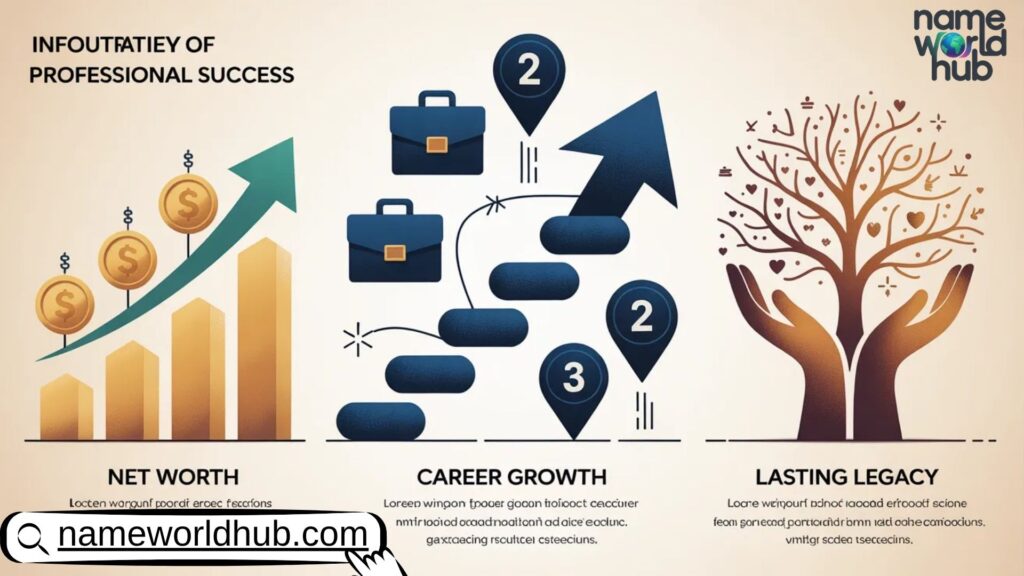
Paula Newsome’s estimated net worth in 2026 ranges between $3–5 million. Her income comes from recurring TV roles, blockbuster film appearances, and stage performances — demonstrating the value Hollywood places on her experience, talent, and dedication.
Her portrayal of Maxine Roby earned her a Screen Actors Guild Award nomination, while her Marvel appearance in Spider-Man: No Way Home — which grossed over $1.9 billion worldwide — introduced her to an entirely new generation of fans at the peak of her career.
Her legacy will not be defined by an internet search query. Instead, it is defined by her ability to move seamlessly from the emotional devastation of Grey’s Anatomy, to the dark comedy of Barry, to the procedural mastery of CSI: Vegas. She represents a generation of character actors who built Hollywood from the ground up, proving that true talent transcends physical expectations, ageism, and industry stereotypes.
Paula Newsome’s acting legacy will outlast any speculation about her walk. Influence on younger actors compounds over time. She is building something that endures — and that is entirely the point.
Frequently Asked Questions
Is Paula Newsome disabled?
There is no confirmed public information stating that Paula Newsome has a disability. Most rumors online are based on speculation rather than official facts.
What health condition does Paula Newsome have?
Paula Newsome has kept her personal health life private, and she has not publicly shared any serious medical condition.
Why do people talk about Paula Newsome’s disability?
Fans often notice physical details or acting roles and begin online discussions, but many of these claims are unverified rumors.
Did Paula Newsome ever speak about her health?
Paula Newsome has rarely discussed private health matters in interviews, choosing to focus more on her acting career.
Is Paula Newsome still acting in TV shows?
Yes, Paula Newsome continues to work in television and remains well known for her strong acting performances.
What is CSI: Vegas star Paula Newsome famous for?
She is famous for appearing in popular TV series and for her role as Maxine Roby in CSI: Vegas.
Has Paula Newsome confirmed disability rumors?
No, Paula Newsome has not officially confirmed any disability rumors shared online.
How has Paula Newsome built her career?
She built her career through years of consistent acting in television dramas, crime series, and guest appearances.
What do fans admire about Paula Newsome?
Fans admire her talent, professionalism, confident screen presence, and long-lasting television career.
Is Paula Newsome active in Hollywood today?
Yes, Paula Newsome remains active in the entertainment industry and continues appearing in modern TV projects.
Conclusion
In conclusion, many people search about Paula Newsome’s disability because they are curious about her health and public appearances. However, Paula Newsome has not openly confirmed any serious disability to the public. Fans continue to admire her strength, confidence, and professional attitude throughout her successful acting career. Her talent and dedication remain the main reasons behind her popularity in the entertainment industry.
Paula Newsome’s career shows that hard work and passion can inspire people regardless of personal challenges. She has earned respect through her powerful performances in television and film over the years. Discussions about her health should always be handled with kindness and respect for her privacy. Above all, Paula Newsome continues to shine as a talented actress and an important figure in Hollywood.
